
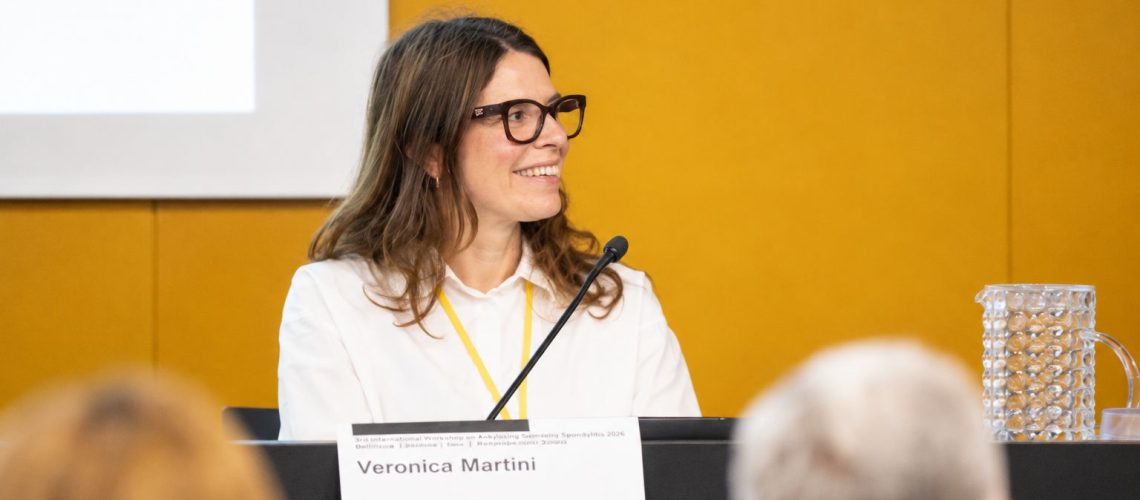
Veronica Martini, a researcher at the Institute for Research in Biomedicine (IRB) in Bellinzona, affiliated with Università della Svizzera italiana (USI), has received a BRIDGE Proof of Concept grant to advance the development of a new class of CXCR2 inhibitors. The project explores an innovative strategy to target tumour-associated neutrophils and investigate new therapeutic approaches to breast cancer.
Neutrophils are the most abundant white blood cells and play an essential role in defending the body against infections. However, recent research has revealed that some neutrophils can also contribute to cancer progression. Within tumours, they may suppress immune responses, promote tumour growth and facilitate the spread of cancer.
Their recruitment to tumours is largely controlled by CXCR2, a receptor found on their surface. Although drugs targeting CXCR2 have already entered clinical trials, existing compounds block the receptor only temporarily.
With the support of a BRIDGE Proof of Concept grant, IRB researcher Veronica Martini aims to advance a new class of inhibitors designed to bind permanently to CXCR2. This approach could provide longer-lasting activity against tumour-associated neutrophils while preserving functions mediated by the closely related receptor CXCR1, which contributes to protection against infections.
Over the course of one year, the project will focus on BP-4, an experimental compound developed to block CXCR2 and potentially prevent neutrophils from contributing to tumour progression. Researchers will assess its stability, how it behaves in in vivo and whether it reaches its intended target. They will then investigate its ability to slow tumour growth in preclinical models of breast cancer, both alone and in combination with immunotherapy. The project represents an important step towards exploring a new therapeutic strategy for breast cancer.