
Collaborating with a Nobel Prize

With the awarding of the Nobel Prize for Medicine 2020 to virologist Charles M. Rice, of Rockefeller University, USI adds another case of a direct relationship with an award winner conferred by the Royal Swedish Academy of Sciences. Davide Robbiani, Director of the Institute for Research in Biomedicine (IRB, affiliated to USI), collaborates with Prof. […]
The role of beta-arrestins in CXCL12/HMGB1-mediated signaling
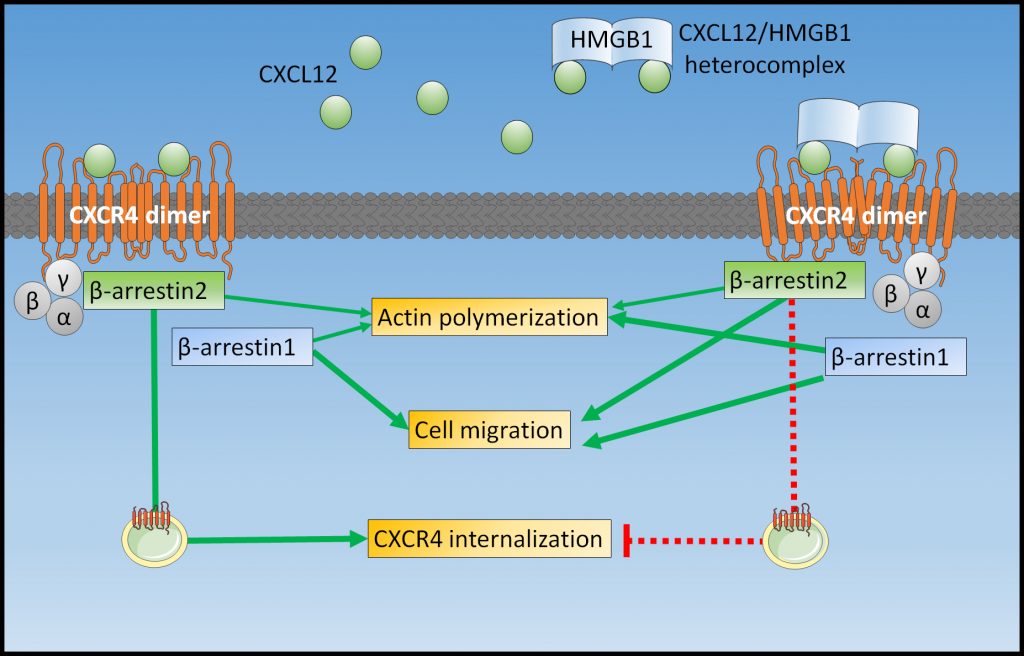
The ability of chemokines to form heterocomplexes with other chemokines or HMGB1 represents an additional level of regulation for shaping their function by enhancing their potency on their cognate receptor. In recent years, the relevance of the CXCL12/HMGB1 heterocomplex activity, on the chemokine receptor CXCR4, has been widely demonstrated in models of inflammation and tissue […]
New research from Ticino on the antibody response to SARS-CoV-2
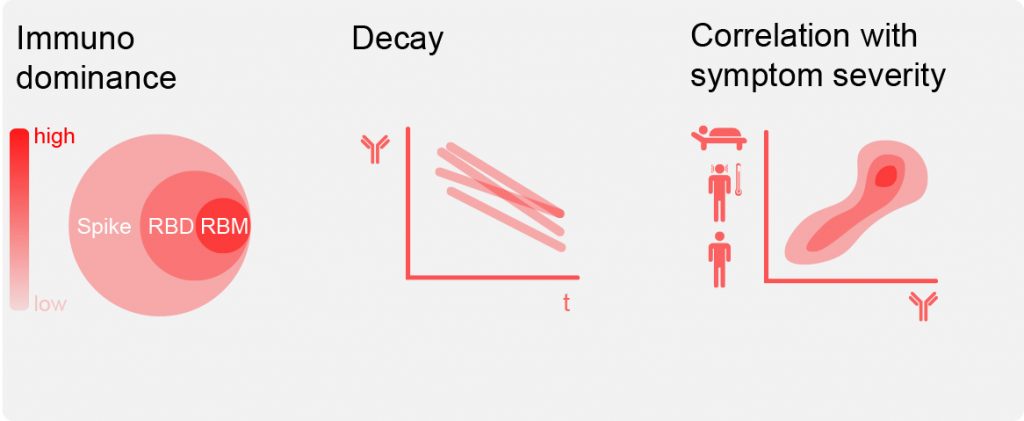
After the announcement, in May, of the first results of serological tests carried out on healthcare personnel in Ticino, significant data on the antibody response to SARS-CoV-2 is now available, thanks to the analysis carried out – among others – by the Institute for Research in Biomedicine (IRB, affiliated to USI) and Humabs BioMed (subsidiary […]
Neuroimmune interactions in the skin, from molecular mechanisms to therapeutic perspectives
From: Head of the lab ‘Neural regulation of Immunity’, Centre d’Immunologie de Marseille Luminy, FR Host contact: Greta Guarda Date: 28.01.2021 12:00 Speakers: Sophie Ugolini Virtual Conference
The transcription factor Bhlhe40 as a regulator of immunity
From: Associate Professor, Department of Pathology & Immunology, Washington University School of Medicine in St. Louis. Host contact: Silvia Monticelli Date: 14.01.2021 15:30 Speakers: Brian Edelson Virtual Conference
12th EADV-IRB Dermatological Web Meeting<br>Distinguished speakers with well-recognized experience will lead this 3-hour event
From: Distinguished speakers with well-recognized experience will lead this 3-hour event Date: 19.11.2020 16:00 – 19:15 Virtual Conference – Registration
Cellular and molecular trafficking in the regulation of inflammation in visceral organs
From: Department of Pathology & Immunology, Washington University School of Medicine in St. Louis, US Host contact: Davide Robbiani Date: 20.10.2020 15:00 Speakers: Gwendalyn (Gwen) Randolph Virtual Conference
The role of bacterial virulence factors in induction of intestinal mucosal immune responses
From: Head of the Gut Microbiology laboratory, Institute for Infectious Diseases, University of Bern, CH Host contact: Fabio Grassi Date: 13.10.2020 12:00 Speaker: Siegfried Hapfelmeier
Fibroblast causalities in chronic inflammation and cancer
From: Member of the Academy of Athens. Director, Department of Physiology, Medical School, University of Athens. Associate Researcher, Biomedical Sciences Research Center ‘Alexander Fleming’ Host contact: Santiago González Date: 6.11.2020 10:00 Speakers: George Kollias Virtual Conference
Regulation of the MLH1-MLH3 endonuclease in meiosis: a Nature paper by the Cejka Lab

When our DNA breaks, cells use the homologous recombination pathway to accurately repair the break, so that DNA is fixed and no mutations are introduced during the repair process. When multiple DNA molecules are broken, the recombination factors use a smart strategy to join only the DNA pieces originating from the same DNA molecules. This […]